

RAFAEL S. DIONISIO*
The world is scrambling because we have a low supply of oil due to the war. It’s temporary, but it could go on for a long time. Still, the effect is severe:
Governments reducing work days
Malls reducing hours
Airlines cancelling flights
30,000 less cars on the roads of Metro Manila.
State of National Emergency declared by the president
It’s a real crisis that makes people remember life during Covid 19 lockdowns. While we brace ourselves for this unfolding disaster, we must also prepare, and stay focused on the even bigger one looming in the horizon – WATER SHORTAGE.
A crisis of water would make this oil shortage look like a scratch. Without water, life will slow down significantly, and some people may lose their livelihoods, and their lives.
A water shortage will mean less movement, the risk of riots and people lining up for water rations just to survive. Our food supply will also be at risk – no water = no farms.
Can you imagine paying P100/liter for WATER in public markets? It’s a very real possibility.
With incoming heat waves of 40 degrees celsius and above (thanks to our behaviors that drive climate change), how will we cool down without water?
The reason? The Philippines does not capture enough fresh water to fuel its consumption. We don’t have enough underground water storage facilities. Our forests are still declining and they are the main source of water. Underground aquifers are also drying up because we are reducing the absorptive capacity of the soil (turned into cement and cutting trees whose roots deposit water to these natural underground storage areas).
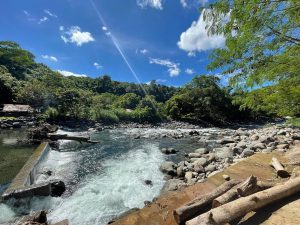
Then there’s the growing population that uses water like it’s an unlimited resource. Believe me it’s not. I used to help manage a small water supply company. A portion of the mountain was reforested to increase the water supply and it was supposed to handle about 100 families. However, due to demand, people kept asking to connect to clean water so that number hit 140++ families. That’s when shortages started to happen.
Some houses would leave the faucet open. Others would sell water – allowing 20+ people to bath everyday even if it was just a home for 5. The result was people would run out of water in the middle of a shower, while they had soap and shampoo in their eyes.
Some ran out of water while flushing toilets; the others while cooking, and the worst – while filling up their drinking water supply. The result was water prices soared to over P100/cubic meter because it had to be shipped from other towns using trucks that run on diesel.
The good thing is that there is still time to act. Every drop of water counts, just as every drop of fuel counts today.
Here are some things we can do to save water.
A. Nature
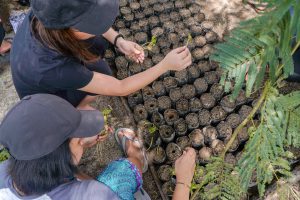
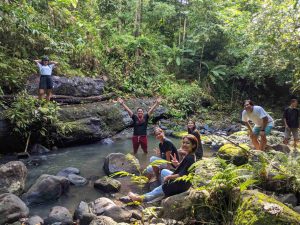
Plant more trees – trees can hold as much as 2000L of water in their bodies, capturing run off water from rain, then depositing it down to the aquifer.
B. Infrastructure
1. Household and building water storage tanks that connect to rainwater collection.
2. Government to build more storage areas for water to catch rain
C. Machine/tech
1. Drip irrigation – either smart systems or DIY ones
2. Use appliances that are water efficient – urinals, washing machines, dishwashers.
D. Behavior
1. Eat less beef. Instead substitute for chicken, pork or vegetable. The water needed to make 1 kg of beef is much higher than the others mentioned.
2. When brushing teeth use a cup, and don’t leave water running.
3. Take shorter showers.
4. When washing clothes or dishes, do so when load is full.
5. Wash your car less, and when you do, use a bucket.
6. Plan your day so you use less clothes.
7. Reduce the number of serving plates you have during meal time – this will reduce the number of containers to wash.
8. Reuse water from cooking pasta or rice to water plants or flush toilets.
These are just some ideas – there are more that you can find in the links below.
At the end of the day, we need to learn how to manage and prioritize our resources as nation. I hope that this oil crisis (since we can’t avoid it) teaches the lessons needed to prepare for our next bout which is water shortage. After all, water is a gift of God, and one that we must be responsible for so that future generations can benefit from it.
This is Raf’s third article in White Butterfly. He wrote “A Dream to Restore Paradise,” May 1, 2024 and “Young Women Stewards of the Environment,” April 1, 2025.
*Raf Dionisio is an entrepreneur working on the regenerative economy. You can reach him at info@madearth.org.
Raf works on the regenerative economy transition with indigenous people, farmers and fisherfolk. His team at MAD Earth/Travel focuses on ecosystem restoration, food security, and agroforestry supported by ecotourism. His team at AVD Green Builds focuses on low carbon construction+ Acoustics through a combination of materials and consultancy services for building.
He is planting 4M trees in Zambales with the Aetas (including 100k cashew, 5k bamboo, 2k citrus and 2k fuel wood). He also works on behavioral change solutions to reduce waste through training.