
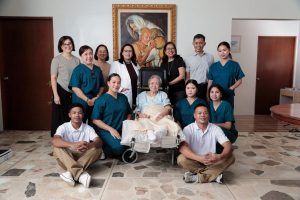

GIRLIE GARCIA-LORENZO AND QUEENIE VELASCO
The seeds of meaningful change are often planted in quiet, personal moments—observations that stir something deeper, experiences that leave a lasting imprint. My journey toward elder care began not in a boardroom, but within the rhythms of family life. My father, Atty. Ramon T. Garcia, was deeply involved with the Seniors Group at the Bel-Air Village Association. Every Wednesday, I watched him come alive—joining “lakbay aral” excursions to Intramuros or the Rizal home in Calamba, sharing meals, laughter, and stories with fellow seniors. What struck me was the transformation: these elders were not merely passing time. They had something to look forward to. Aging, I saw, could be a season of continued discovery—not decline.
That realization deepened when my father was diagnosed with advanced liver cancer. He chose to spend his final days at home, guided by Dr. Joey Joson, a palliative care specialist from Makati Medical Center. The time that followed was not marked by fear, but by presence—shared conversations, quiet companionship, a sense of peace. He had prepared a living will, giving our family clarity and confidence in honoring his wishes. His passing was dignified. And in that dignity, a conviction was born in me: that the end of life deserves as much care, respect, and intentionality as its beginning.
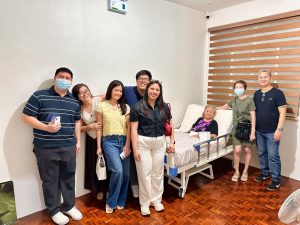
For Queenie Velasco, the path to Seniors Living Well came differently—and, in her words, as a surprise. Queenie is the widow of Joey Velasco, the beloved Filipino painter whose works found the face of Christ in the poor, the forgotten, and the cast aside. That sensibility—seeing the sacred in the overlooked—runs quietly through everything she does. “Putting up this home for the elderly was a surprise for me,” she recalls. “It all started when I helped a relative ease the burden of managing a tenant in this house.” What began as a simple search for a new tenant became something far more significant when a couple came forward with a shared dream—and asked if she would be willing to partner with them. She prayed about it. She thought of her own mother-in-law, then in another nursing home. And she said yes.
That decision came with a lesson she carries still: “Willingness alone is not enough. We also need to be capable and knowledgeable.” Watching the professional care her mother-in-law received—and seeing her medical results confirm the rightness of the choice—Queenie understood that love for the elderly must be matched by competence. Together with her partners, she began building a care process anchored in both.
A Vision Rooted in Wholeness
Queenie and I share a vision that goes beyond clinical care. Drawing from the work of developmental psychologist Erik Erikson, I see old age as a stage defined by the tension between integrity and despair—a time when individuals ask, quietly but urgently: Did I live a meaningful life? Those who find an answer in the affirmative carry wisdom and peace. Others may struggle with regret and fear. The role of elder care, then, is not only to support physical well-being, but to guide individuals toward reflection, acceptance, and ultimately, inner peace.
Queenie puts it more simply, and perhaps more warmly: “My vision is to provide professional and compassionate service—giving each resident a joyful heart, a peaceful mind, and a dignified, happy new chapter of their life.” She imagines care delivered in a Filipino way: warm, respectful, and deeply relational—not institutional, but familial.
The Structure Behind the Spirit
At Seniors Living Well, this philosophy is translated into practice through a rigorous and compassionate framework. The team conducts thorough intake screenings using the Outcome and Assessment Information Set (OASIS)—a comprehensive system that evaluates each resident’s clinical condition, daily functioning, psychosocial and spiritual state, safety, and risk factors. A doctor is on call for immediate concerns and specialized referrals. Care is not generic. It is deeply personal. Each resident’s care plan is guided by structured assessments and continuously updated through daily observation and clinical oversight.
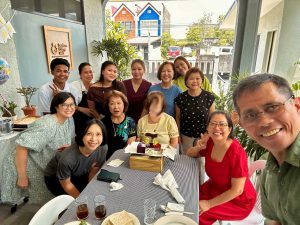
But what makes Seniors Living Well distinctive is what lies beneath the structure. The home is designed to feel like a real home. Residents walk freely, spend time in the garden, cook, and watch television alongside caregivers and fellow residents. “One of the biggest challenges in a nursing home is being away from loved ones,” Queenie observes. The answer, she believes, is not to replicate institutional routines, but to protect the ordinary textures of daily life.
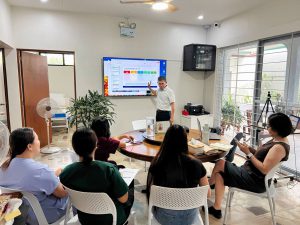
Caregivers are trained—and more than trained, they are formed. Weekly seminars and reflective discussions keep the team aligned. Staff meetings begin with prayer, grounding the work in a sense of purpose. Through regular check-ins and open conversations, caregivers are supported emotionally and mentally. I am clear on why this matters: when caregivers feel supported, they are better able to extend compassion, patience, and genuine presence. This is the ripple effect—a culture of care that flows from staff to residents, and outward to families.
Personal, Emotional, Spiritual
The care at Seniors Living Well is understood in three registers. Personal care means understanding each resident’s own pace of life—supporting how they feel, helping them accept and manage their limitations without diminishing their sense of self. Emotional care means being present, listening, spending time, even when nothing is expected in return. It means making residents feel valued and worthy, learning from the richness of their stories and lived experience.
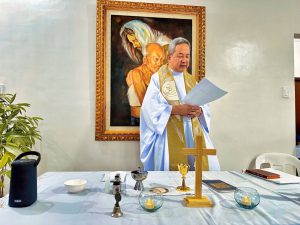
Spiritual care—perhaps the most tender dimension—finds its image in a painting that hangs in our main hall. It was made by Joey Velasco, my husband. In it, an old man—frail and bare-shouldered, eyes closed in surrender—embraces Christ while holding His crown of thorns. The old man’s name was Mang Crispin: eighty-three years old, abandoned by seven children, the model Joey chose for his version of the Prodigal Son—a man who had wandered so long he came home as a grandfather. After the painting was finished, Joey could not leave Mang Crispin behind. He brought him into our home and cared for him until the end. “When I hold the broken palm of Mang Crispin,” Joey wrote, “it’s like I’m touching God’s wounds.” Joey is gone now. But his painting remains on our wall, and his conviction lives in every room of this home. Every resident who comes to us carries a life’s worth of longing, loss, and love. Our role is to help them grow closer to God: to keep a peaceful environment where His presence is felt in the ordinary and the everyday. Mass, counseling, Holy Communion, and moments of healing, forgiveness, and reconciliation are woven into the rhythm of each week. Families remain closely involved, not replaced by the home, but held by it. Because Joey taught us—and we believe—that Christ is never far. He is just around the corner, in the face of every elder we are privileged to serve.
In the end, Queenie and I are animated by the same conviction, arrived at through different roads: that how we care for our elderly is, in many ways, a reflection of how we value life itself. A home is not a building. It is an act of love made habitable—where aging is embraced, not feared; where meaning is tended until the very last day; and where every person is given the opportunity to leave this world with dignity, peace, and the quiet certainty that they were not alone.
If you or someone you love is discerning elder care, we warmly invite you to visit us at Seniors Living Well on Facebook or find us on Google. We would be honored to walk with your family on this journey.