

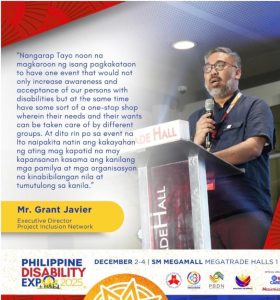
GRANT “COCOI” C. JAVIER
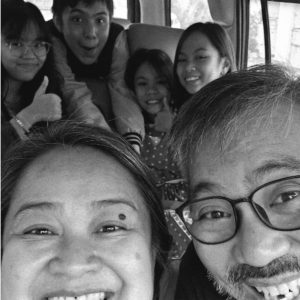
People often ask how I became involved in disability advocacy — especially those who have known me for years. Some assume it began through my mission work, since I have been a missionary for decades, or through corporate involvement. Both are true in some way, but the real reason is much simpler and more personal. It began at home. It began when I became a father to my five children — Pablo, Benita, Lourdes, Guadalupe, and Isidro. Four are with us now; Isidro is with our Lord in heaven. Three of the four — Pablo, Benita, and Guadalupe — have Autism Spectrum Disorder. Pablo is Level 3; Benita and Guadalupe are Level 1.
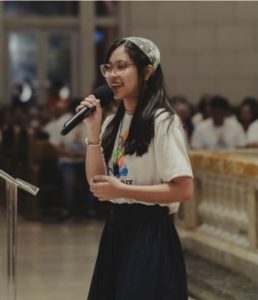
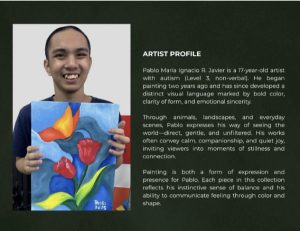
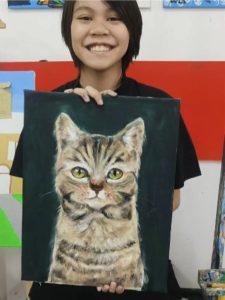
Nothing truly prepares a father for the realities of raising children on the spectrum. You enter parenthood with expectations, timelines, and dreams. Then life introduces you to a different world — one of therapies, assessments, sensory challenges, and uncertainty that many families quietly carry behind closed doors. There were moments my wife and I feared for our children’s future, questioned whether we were doing enough, and grew exhausted navigating systems unprepared for families like ours. Through it all, one thing became clear: my children were never the problem. The real problem was a world that still struggles to understand that every human person possesses equal dignity.
As a father and a missionary in Missionary Families of Christ, my faith has always taught me that every human being is created in the image and likeness of God. Raising Pablo, Benita, and Guadalupe made that truth come alive in a deeper way. When society sees disability, many people focus on limitation — even burden. God does not. God sees personhood before condition, dignity before diagnosis, humanity before labels. A child with autism is not less human, less worthy, or less reflective of God’s image. Human dignity is not earned through productivity or conformity to society’s standards — it is inherent, God-given. Since that dignity comes from God, no disability can take it away. This conviction, together with a deep desire to give my children a better future, became the foundation of my advocacy.
I began seeing how many systems unintentionally exclude people with disabilities — not because they lack value, but because society often builds environments only for those who fit a certain mold. I saw families fighting battles most people never notice: access to education, therapies, healthcare, acceptance, and eventually meaningful opportunity. I also saw how easily society reduces persons with disabilities to stereotypes — objects of pity or sources of inspiration — while failing to recognize them simply as persons with equal dignity. That disturbed me deeply. Out of that realization, I founded the Project Inclusion Network. For me, inclusion has never been about charity or political correctness — it is about love and justice. Persons with disabilities are not outsiders asking for special treatment; they are human beings who already belong. Project Inclusion Network became my way of helping create spaces — in schools, communities, workplaces, churches, and society — where that dignity is recognized and protected.
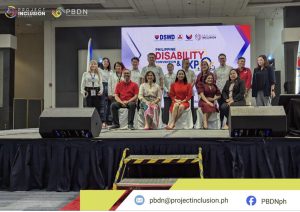
Over time, this advocacy expanded into the corporate world through the Philippine Business and Disability Network, which I also founded, now accredited under the International Labor Organization’s Global Business and Disability Network (ILO-GBDN). Many employers still view disability through the lens of limitation instead of potential. We often ask, “Are persons with disabilities ready for work?” I began asking a different question: “Are employers ready for inclusion?” Many neurodivergent individuals and persons with disabilities are capable, talented, creative, loyal, and hardworking. What they often lack is not ability, but opportunity — environments willing to understand them, adapt with them, and recognize their strengths.
Every parent wants to believe their child will have a future filled with dignity and purpose. But raising children on the spectrum also makes you painfully aware of how easily society can underestimate them before they are given a chance. Instead of letting that pain become bitterness, I chose — encouraged by our community leader, Tito Frank Padilla — to let it become mission. My children taught me lessons no seminar or professional training ever could: patience, humility, and how to celebrate progress others overlook. They taught me that human worth never depends on efficiency or performance. Most of all, they taught me how to truly see people. In a world obsessed with achievement, persons with disabilities remind us of something profoundly human: every person deserves love, respect, and belonging simply because they are human — made in the image and likeness of God.
I know I could never have done this alone. My wife, Gay, has been my constant partner through every struggle, decision, and difficult season. She is my perpetual prayer warrior. Behind whatever people see publicly in my advocacy is the quiet strength, sacrifice, and love of a woman who has walked this journey with me every day — carrying burdens few people fully understand. Without Gay, I would not be where I am today. Whatever impact I have made through advocacy, leadership, or ministry is deeply shared with her, because none of it was accomplished alone.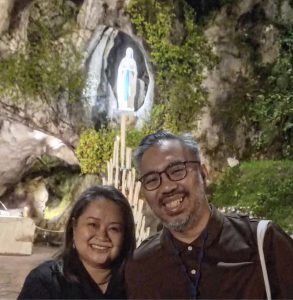
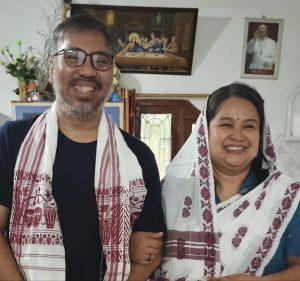
My advocacy and my missionary work eventually became inseparable. The Gospel consistently affirms the dignity of those society ignores or marginalizes. Christ always moved toward those pushed to the edges — restoring belonging, affirming worth, reminding people that no one is disposable in the eyes of God. For me, disability advocacy is part of living out that Gospel: helping build a society where no family feels abandoned, no child feels invisible, and no person believes they are less because of a disability.
My vision is simple, though achieving it will take generations of work. I dream of a society where inclusion is normal — where schools welcome every child, workplaces value neurodiversity, churches become places of true belonging, and families raising children with disabilities no longer feel isolated. Most of all, I dream of a world where children like Pablo, Benita, and Guadalupe grow up knowing they never have to prove their worth to deserve love and respect. Their dignity does not come from society. It comes from God, and that dignity makes all of us equal.
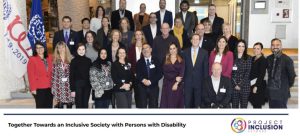
PHOTO OP (JAVIER RIGHT FRONT ROW) WITH THE HEADS OF THE DIFFERENT NATIONAL BUSINESS AND DISABILITY NETWORKS IN GENEVA, SWITZERLAND. JAVIER LEADS THE PHILIPPINES AND HAS REPRESENTED THE COUNTRY THERE SINCE 2019 TO PRESENT.
Looking back on this journey as a father, missionary, husband, and advocate, I realize that even the struggles, uncertainties, and painful moments were never wasted. God used them to shape my heart, deepen my faith, and give purpose to experiences I once struggled to understand. That is why Romans 8:28 resonates so deeply with me: “And we know that in all things God works for the good of those who love Him, who have been called according to His purpose.” For our family, that verse is not just comforting words. It is lived reality. What once felt overwhelming became mission. What once brought fear became conviction. What began within our home became a calling to help build a more inclusive and compassionate world. And through it all, God has remained faithful.